
March 5, 2026. Words by Olivia Rall
Chiara and I first met at sixteen during a semester spent studying and making art at The Oxbow School. Even then she was the most naturally bohemian person I had ever met, in the most original sense of the word. A few years later we became roommates at Bennington College. Our dorm room was tiny, but Chiara somehow still managed to create lovely constellations of objects on every available surface. Her aesthetic has always effortlessly existed around her, expressed through materials, found objects, and photographs.
That instinct has since evolved into her Santa Fe–based practice, Al Amor Studio, where she creates handmade boxes, printed materials, and tactile objects for artists and independent brands. When the time came to source beautifully made boxes for our ritual kits, it was clear there was no one better suited for the task. A talented artist and dear friend, here are Chiara’s thoughts on the delicate balance of being both an artist and business owner.
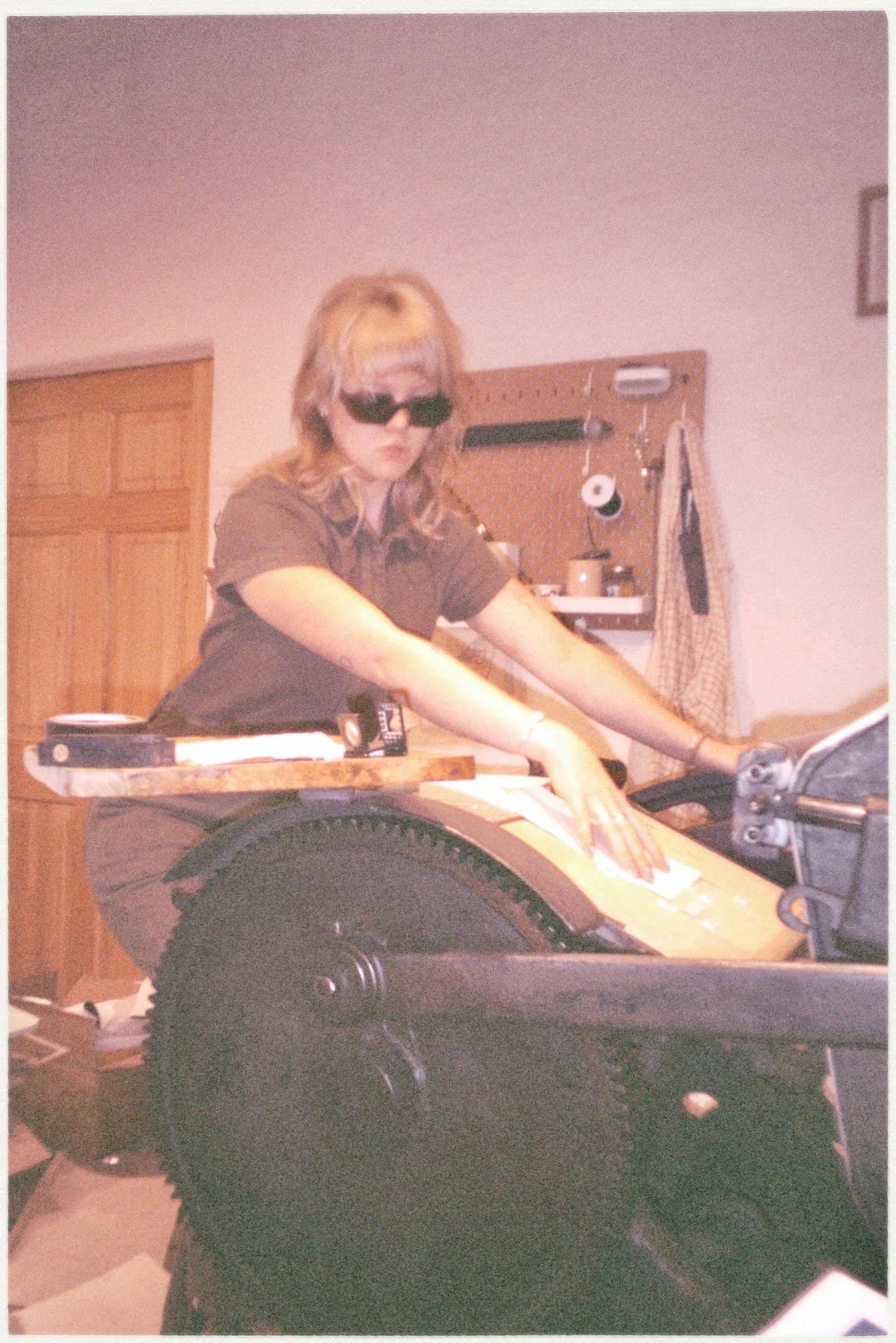
Photograph courtesy of Chiara Brandi.
How do you introduce yourself now — artist, photographer, founder, or something else entirely? And does it change depending on who’s asking?
If I am being honest, sometimes I’m still not completely sure how to introduce myself! I have always been a mufti-faceted person who wears many different hats. Often I find the roles I’ve taken on in various chapters of my life, and the skills I have because of them, are naturally incorporated into my story as a small business owner. I ended up with a career in an area that merges all of the interests I have explored in my life before I got to this point. So I suppose everything informs one another and melts together. Depending on who I am working with, I am able to introduce these parts of my skillset as a human and a maker alongside my role as a business owner.
Your work is deeply tactile. What does working with your hands give you that digital tools never could?
Many times, what it gives me is simple: less frustration! Digital tools are great for achieving results that your hands cannot do and vice versa. When you try and force one to do the other’s job, that’s when things stop working smoothly. Creating my boxes and printing by hand allows me to be a part of each step of the process in a way that feels more present than when I am creating digitally. I feel more in control because I have all of the tools in one place in front of me, whereas with a screen, I often have to go back and forth between different resources and end up feeling scattered and not being able to create as freely.
I also find that when I am making something with my hands, I feel a stronger sense of ownership and pride over the final product than I do with anything in the digital realm. It is the manifestation of blood, sweat and tears right there in my hands ready to be given to the client. I believe they can feel that effort as well.
What part of your process feels the most sacred?
Hands down the most meaningful part of my process as a creator right now is the opportunities I have to work with others in making their dream projects a physical reality. It feels a lot like problem solving when I get to create a box or a printed material that achieves such a specific purpose or communicates a client’s ideas effectively. In this process, I often get to collaborate with people who also understand and appreciate the need for tactile objects and ephemera in both commercial and independent industries, and those relationships and conversations have become very special to me.
Do you feel your approach to leadership is shaped by your femininity (or do you resist that framing altogether)?
In some ways, yes, and in other ways, no. I believe that women inherently have a different set of skills as leaders when it comes to intuition and communication. These sensibilities have been instrumental in shaping the way I walk through this new chapter in my life as a female business owner. I try to bring transparency into my work in every way I can. About where I am in my head that day, my past experiences in the industry, and my areas of strength and weakness.
Then there are the other parts about the print/production industry that deal with femininity in a very direct way. Sometimes you will go to pick up a piece of heavy machinery covered with oil and the guy (most often) will look at you like you are completely crazy. Other times, they don’t treat you differently at all. The letterpress community is generally very accepting of all gender identities, but because of the physical strength and endurance required to run these machines every day, it wasn’t always an industry that women were part of like they are today. So that is very cool to see changing now!
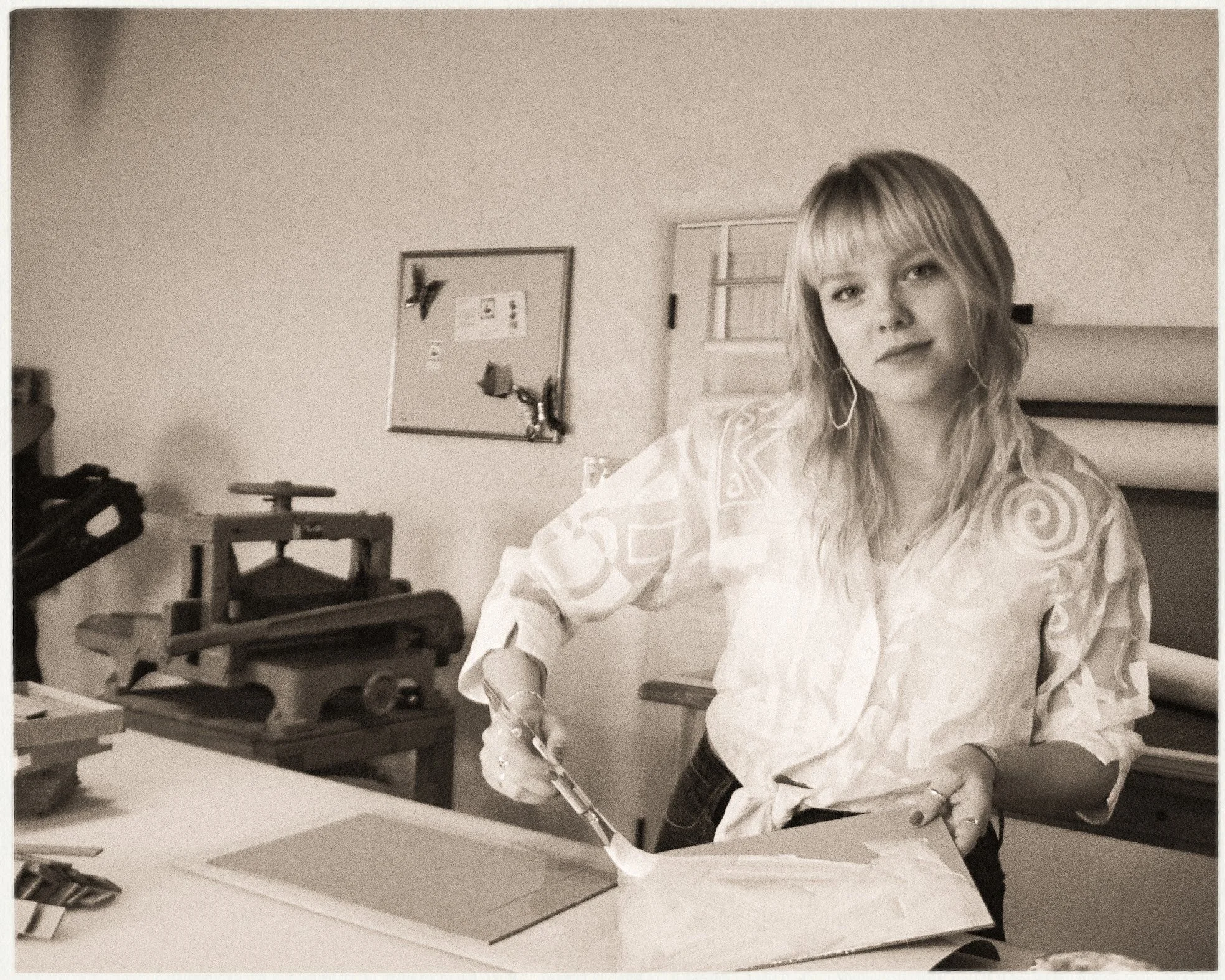
Photograph courtesy of Chiara Brandi.
Do you have any rituals that help you transition between being an artist and being a business owner?
Because I am hand-making artful objects for a large variety of industries, there are times where I find myself having to rely more on the business side of my brain rather than the artist's way of thinking and vice versa. My rituals for this transition don’t always look the same, but I usually try to have my creative planning take place in a completely different area of my studio than where the business thinking is done. I don’t have a lot of physical space, but I find that if I do everything that is logistical on the computer first, then I am able to transition more smoothly into the artist/creator part of my day working with my hands.
As artists, especially when you go to school for art, we are often not taught how to build a successful business off of our practice. Or how to set value to our time and work. So this has been a learning curve, as I am making “products” for people’s use but also have to remember all of the artistry that goes into my process. This is what makes it stand out against other mass-produced packaging and ultimately more expensive. Not everyone will view my work as art, and the business owner in me has learned how to cope with that.
How do you know when you’re creatively depleted and what do you do before burnout sets in?
There is a point I hit, usually when I have a lot of projects on my hands all at once, where the work no longer feels joyful to me anymore. I think this happens to many people who run small creative businesses mostly on their own. And to a certain extent, we often just have to push through that time period where work is just work that we have to get done. Things can’t feel exciting all the time. But I find that if I can give myself even the smallest moments of time to rest and reset my mind and body after all that chaos, the burnout feels much less heavy. I also actively try to remind myself that once I am through this crazy part, my brain will have so much more space to take on creative projects I am really excited about and didn’t have the time or resources for before.
What visual or sensory references are you returning to lately (colors, textures, eras, objects)?
I’ve been obsessed with mid-century modern and late 70s-80s interior design. Especially the color palette, and the shapes that accompany these eras. I feel inspired by the balance between play and refinement that came with these design choices.
Vintage paper ephemera is also always on my mind. The envelope that your film photos came in, matchbooks, calling cards, button and thread packaging cards, seed packets, cutout paper toys, and postcards of course. These things have become fossils of another time and life lived. In a life filled with digital memories, I strive to make objects that can still serve as these kinds of tactile remnants for future generations.
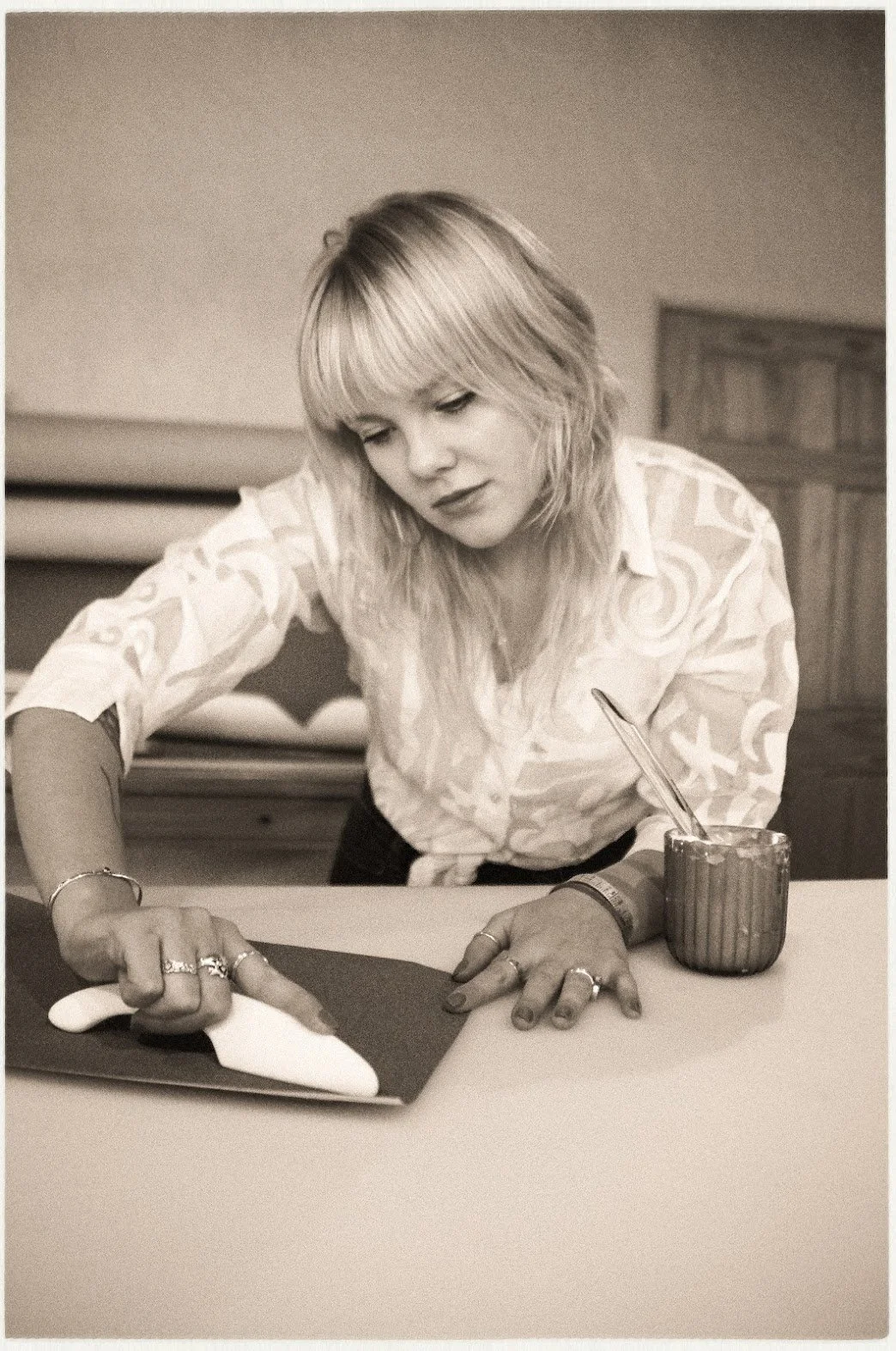
Photograph courtesy of Chiara Brandi.
What’s something you’re deeply inspired by right now that might surprise people?
Strangely, I am really loving the bright color palettes that were used in toy
manufacturing and designer objects in the 80s and 90s. Anyone who knows me knows that I am always a true desert girl at heart, drawn to the red clay and natural tones of the southwest landscape I grew up in. But I am feeling so inspired to add “ugly pretty” color and patterns to my work that call back nostalgic and playful moments.
What feels essential to protect right now — in your work, your life, or your spirit?
I am deeply protective of my morals at the moment. I worked for many years doing production and design for a female business owner who was unsupportive of other women entrepreneurs and often took advantage of clients and partners. This experience made me very dedicated to doing things differently when opening my own studio. I will not compromise when it comes to the quality of work we are producing, no matter who the client is or what the job entails. I also am sure to give a high level of respect at all times to those I am collaborating with and others (especially women) working in the same industries as myself. These are important values to me that are non-negotiable. I am proud of the work that has come out of my studio because of my willingness to share and receive knowledge, be patient and flexible, and work in a way that feels true to myself. Also very protective of the US Postal Service! Go mail a letter and support this amazing system that is vital and at risk of being defunded.
What role do mistakes play in your work and are they something to eliminate or something to listen to?
I have to account for a certain level of human error that is unavoidable in handmade objects and printing. There will always be more items made than actually go out to the client. I have learned to order more supplies than needed, even if we don’t end up using everything, because there are so many moving parts to each project where things can vary and go differently than expected. The waste that is created by this is my least favorite part of doing what I do, but I try to reuse and recycle everything I am able to.
As a reformed perfectionist, I have also learned over time that usually when you are most obsessive about something is when you make the most mistakes. I now also know when I am messing something up over and over it usually means I am exhausted and it's time to call it a day or switch tasks.
In an era where so much of life exists on screens, Chiara continues to build objects that insist on being held. Boxes, prints, fragments of paper that carry evidence of human hands. It feels fitting that the containers for The Awakening ritual kits were made this way too. Some things are meant to live in the digital world. Chiara’s work reminds us that some things never should.